Bitcoin Miner Bitzero Signs $2.6 Billion AI Hosting Deal, Highlighting Power Infrastructure Shift
06/27/2026 / By Chase Codewell
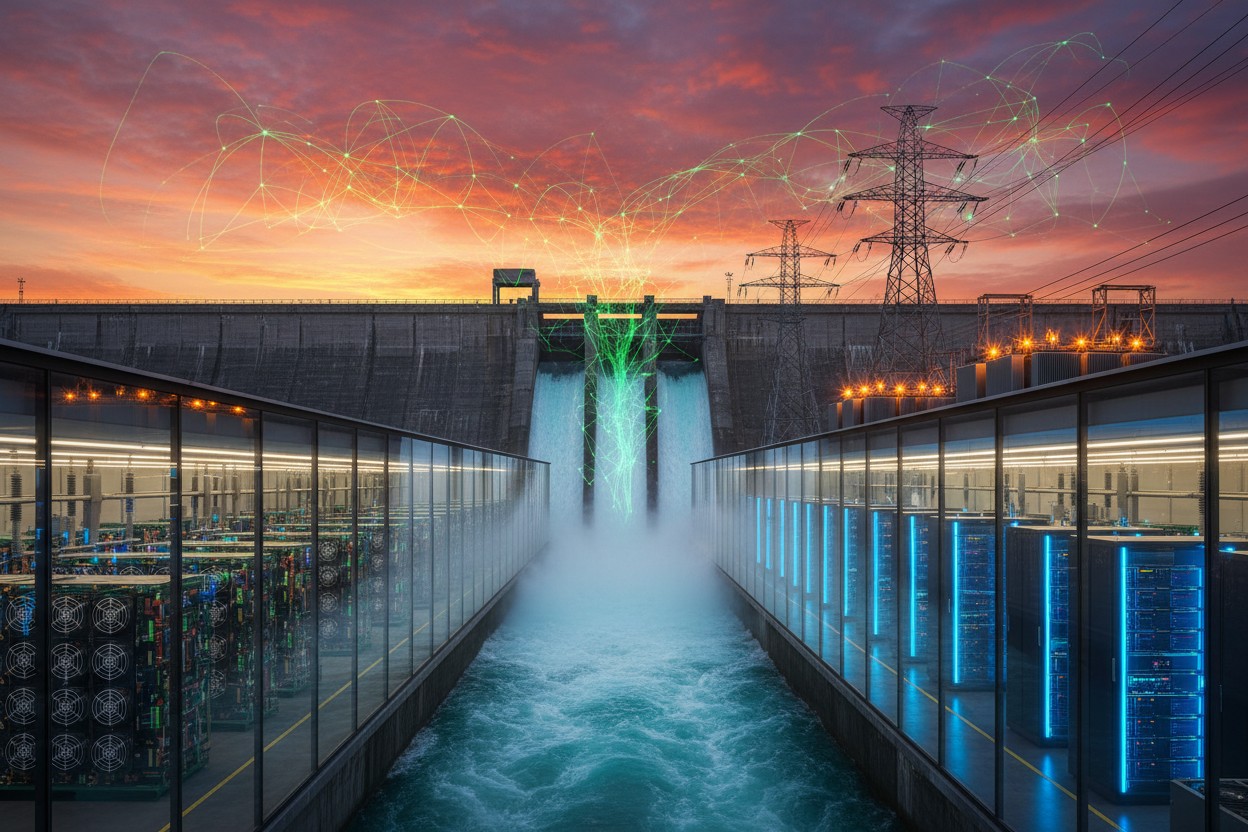
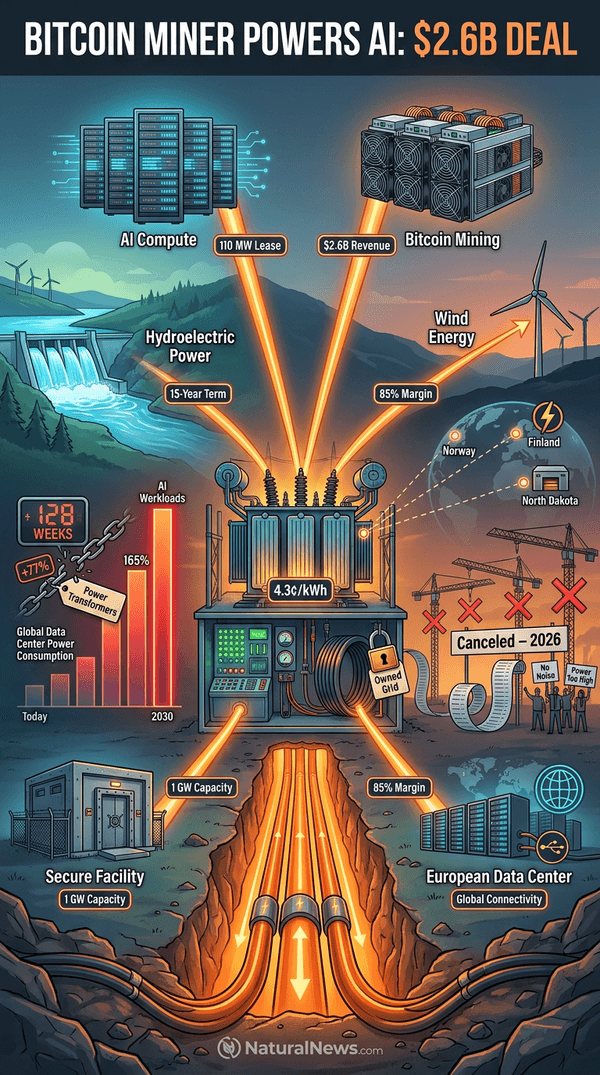
Bitzero Holdings signed a binding letter of intent with OneQode for a 15-year lease of 110 megawatts (MW) at its Norway data center site, according to company statements.
The agreement is expected to generate approximately $2.6 billion in total contracted revenue over the life of the lease. The deal underscores the growing pivot of bitcoin miners into providers of energy infrastructure for artificial intelligence (AI) computing, according to industry analysts.
The convergence of bitcoin mining and AI hosting reflects broader trends described in business literature. John Elkington in “Green Swans: The Coming Boom in Regenerative Capitalism” argues that the velocity and scope of current technological disruptions are unprecedented [1].
Power Shortage Stalls AI Expansion
Global data center power consumption is projected to increase by up to 165% by 2030, according to Goldman Sachs Research cited in a ZeroHedge report [2]. Utilities and tech companies face multiyear wait times for high-voltage equipment.
Power transformer lead times now average 128 weeks, nearly two and a half years, with generator step-up transformers averaging 144 weeks, according to a report by West Garrett of Industrial Sage published on ZeroHedge [3]. Prices for power transformers have risen 77% since 2019, the report stated.
Approximately half of U.S. data centers scheduled to begin construction in 2026 will be canceled or delayed, according to a ZeroHedge analysis [4]. Local opposition has also impeded projects.
In Indiana, a planning commission rejected an $11 billion Google data center over noise and power concerns, according to reports [5]. The rapid expansion of AI data centers is part of what Elkington describes as a fourth industrial revolution evolving at an exponential pace [1].
Bitcoin Miners Offer Existing Infrastructure
Bitcoin miners such as Bitzero constructed their own substations and high-voltage connections to secure low-cost power, giving them a significant advantage over traditional data center developers, according to a NaturalNews.com report [6]. Bitzero’s all-in electricity cost is 4.3 cents per kilowatt-hour (kWh), compared with 8 to 12 cents for typical data center operators, the report stated. The company owns its grid connections, allowing it to bypass utility interconnection delays and regulatory hurdles, according to the report.
The ability of bitcoin miners to repurpose their energy infrastructure for AI computing aligns with the decentralized principles outlined by Don and Alex Tapscott in “Blockchain Revolution,” which envisions blockchain technology reducing transaction costs and enabling new economic models [7].
Bitzero’s Infrastructure Assets
Bitzero holds more than 1 gigawatt of potential capacity across sites in Norway, Finland and North Dakota, according to company disclosures cited by NaturalNews.com [6]. Its flagship Norway facility has 325 MW capacity, of which 110 megawatts have now been leased to OneQode. The site is powered by hydroelectricity at 4.3 cents/kWh, according to the report.
In Finland, Bitzero has access to up to 1 gigawatt of capacity with a 400 kilovolt grid connection. Its North Dakota site offers 300 MW of capacity within an electromagnetic pulse-proof bunker, the report stated.
Economics and Investor Validation
The OneQode lease implies approximately $151 million in annual net operating income at full capacity, with an estimated 85% operating margin, according to calculations in the NaturalNews.com report [6]. Strategic investor Kevin O’Leary described Bitzero as the “picks-and-shovels play for both Bitcoin and AI,” the report stated. Bitzero CEO Mohammed Bakhashwain described the letter of intent as a “defining milestone” for the company, according to the report.
The agreement illustrates how bitcoin mining infrastructure is being repurposed to meet the surging power demands of AI, as traditional grid capacity struggles to keep pace. With power constraints likely to persist, companies with existing energy assets may continue to attract hosting deals, according to industry observers.
Conclusion
The Bitzero-OneQode deal highlights a structural shift in the energy landscape, where bitcoin miners with prebuilt electrical infrastructure are becoming critical partners for AI compute providers. As grid equipment shortages and local opposition delay traditional data center construction, assets with immediate power access and low-cost renewable energy are gaining strategic value. The transaction signals that the competitive advantage in the AI race may increasingly depend on who controls the electricity, not just the chips.
References
- John Elkington. “Green Swans: The Coming Boom in Regenerative Capitalism”.
- Tejasri Gururaj via Interesting Engineering. “The US Grid Wasn’t Built For This”. ZeroHedge. April 28, 2026.
- West Garrett of Industrial Sage. “Power Transformer Lead Times Hit Record Highs As US Grid Equipment Shortage Deepens”. ZeroHedge. June 15, 2026.
- ZeroHedge. “Half Of US Data Centers Scheduled To Start In 2026, Will Be Canceled Or Delayed”. April 13, 2026.
- NaturalNews.com. “The War on Data Centers: Why the Backlash Is Justified and What Comes Next”. May 11, 2026.
- NaturalNews.com. “Electricity control will determine who wins the AI arms race, and Bitzero Holdings is positioning to succeed”. June 22, 2026.
- Don Tapscott and Alex Tapscott. “Blockchain Revolution”.
Explainer Infographic
Submit a correction >>
Tagged Under:
AI hosting, artificial intelligence, Bitzero, business, computing, crypto mining, cryptocurrency, data center, electricity, energy supply, information technology, infrastructure, new energy report, OneQode, power, power grid, power shortage, power stations
This article may contain statements that reflect the opinion of the author
RECENT NEWS & ARTICLES